
Expert Support
Available 24/7 via email
Available 24/7 via email

I'll admit it up front: I used to think I was a great gift giver. Turns out I was mostly great at buying things I wanted and hoping they'd land on somebody else. Last year I gave my brother a candle he was allergic to. I didn't know, because I never asked. He said "wow, thanks," set it on a shelf, and I'm pretty sure it's still up there, unlit, silently judging me from across the living room.
Gift-giving etiquette is full of rules nobody actually agrees on, and most of those rules quietly protect the giver's feelings while ignoring the person ripping the paper off. It's not that giving gifts is bad. It's that we've built a whole culture around it that's terrified to admit when it isn't working.
I also know I'm not the only one thinking this. Under every gift question anyone asks — "will it land or be weird?", "is this too cheap?", "will they keep it or toss it?" — there's the same quiet anxiety: am I giving for them, or am I giving for me? Nobody wants to say that part out loud, because it makes the whole ritual feel a little hollow. But I'd rather talk about it than keep pretending the wrapping paper fixes everything.
This isn't an anti-gift rant, by the way. I love giving gifts. I just think we'd all enjoy it a lot more if we stopped treating honesty like the enemy. So here are twelve opinions I've landed on after years of getting it wrong. Some of them will annoy people. I'm okay with that. I've unwrapped enough "thoughtful" gifts to have earned a take or two.

1. Surprise gifts are mostly about the giver's ego, not the recipient's happiness.
The rush of the surprise belongs to the giver. You get to feel clever and generous for the forty seconds it takes them to tear the paper off. They get a thing they didn't ask for and now have to perform delight about. Half the time the "wow" is just politeness with good posture. We call it a gift for them, but the surprise itself — that part is mostly for us.
My cousin once gave his girlfriend a surprise trip to a place she'd told him, point-blank, she didn't want to go. She smiled for the photos and spent the weekend quietly resentful. The trip wasn't for her. It was so he could feel like the boyfriend who plans surprise trips. That's the whole problem in a carry-on bag.
2. It's more considerate to ask someone exactly what they want.
Somewhere along the way, asking got labeled as lazy or unromantic. It's neither. Asking is the most respectful thing you can do with someone's one birthday a year. A gift that gets used every single day beats a surprise that lives in a drawer for three years and then quietly becomes someone else's white-elephant contribution. If you're close enough to spend money on them, you're close enough to say, "hey, what do you actually want this year?"
The whole point is whether they feel known. That's the gap between gifts that actually say "I know you" and gifts that just say "I guessed." You can't feel known by somebody else's lucky guess.

3. Handmade gifts are overrated — effort doesn't magically turn something ugly into something meaningful.
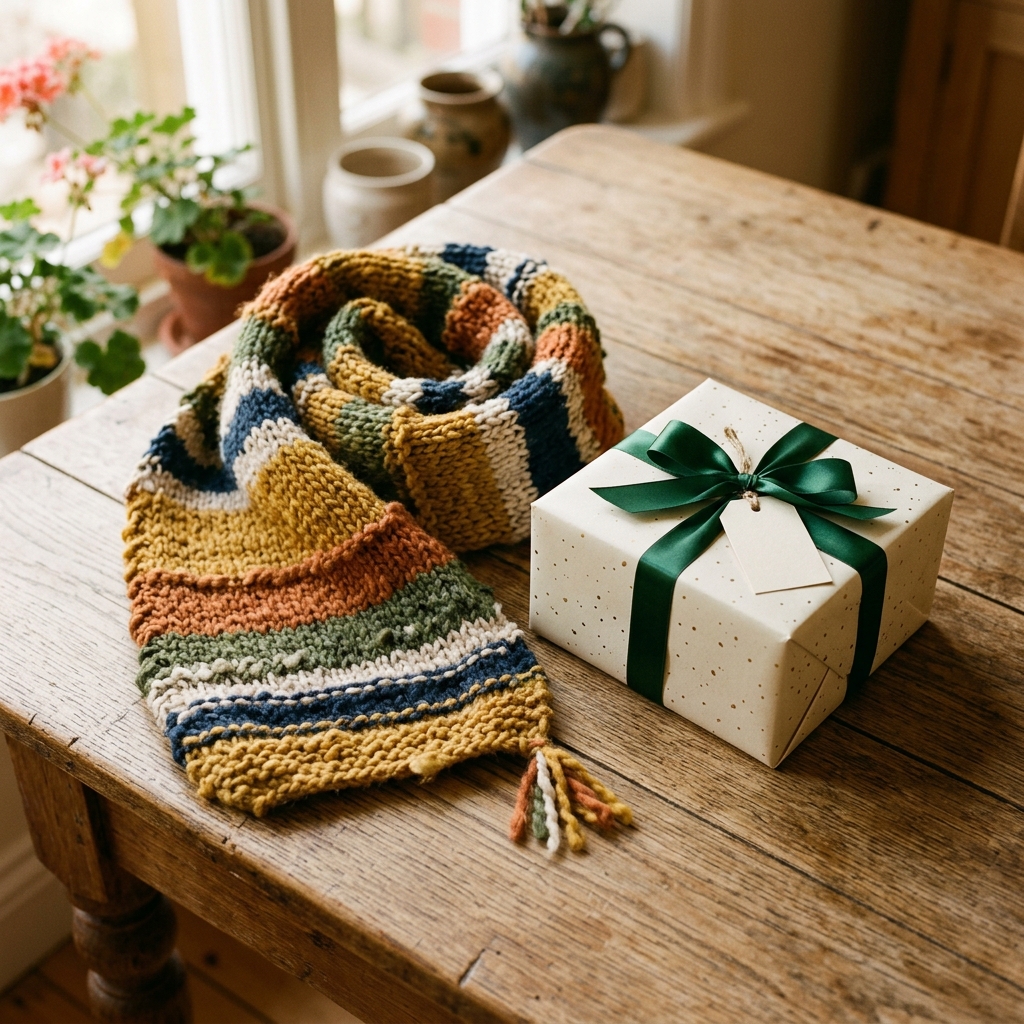
I can already feel the angry emails forming. Here's the thing: time spent does not equal value received. A lopsided scarf you knitted because you love knitting is a gift to your hobby, not necessarily to me. The thought counts, sure. But so does whether I'll use it, want it, or have anywhere to put it. And if someone has told you three times they don't want handmade gifts and you made them a DIY gift anyway, that isn't thoughtfulness. That's just not listening with extra steps. None of this means handmade gifts are always wrong, either. A thing you made that matches exactly what they love — their taste, their humor, their kitchen — can hit harder than anything off a shelf. The difference is the same as everything else on this list: it's about them, not about you collecting credit for the effort.
4. People judge gifts by price way more than they admit, even while saying "it's the thought that counts."
Nobody opens a box and thinks nothing about the money. They might not be tacky enough to say it out loud, but the math runs in the background anyway. Is this roughly equal to what I'd give them? Did they go cheap? Did they go too hard and now I secretly owe them? We lean on "it's the thought that counts" because admitting we're quietly doing gift-price arithmetic makes us sound shallow. We all still do the arithmetic. The trick is to spend the money on something they'll actually use instead of something that just hits a price point and then sits there.
5. People use gifts to control family and friend dynamics way more than they'd like to admit.
Some gifts arrive with a receipt and a silent invoice: loyalty, forgiveness, a favor, a seat at the table. The big expensive thing you didn't ask for. The present that shows up right after a fight. The one that gets mentioned later — "after everything I gave you." That's not generosity, it's leverage wearing wrapping paper. You don't have to cash a check that a gift is secretly writing in your name.
I've watched it happen in real time. A relative shows up with a generous check, and six months later the favor gets called in, casually, like it was always part of the deal. Everyone knew the real price. The check just made it awkward to say no.
6. Giving someone a pet as a gift without asking is irresponsible, not sweet.
A pet isn't a present, it's a decade of feeding, vet bills, hair on everything, and rearranged holidays. Dropping a living thing into someone's life because it looked cute in a bow is exactly how shelters fill up in January. The surprise puppy at Christmas is a movie scene, not a life plan. A pet is a decision the recipient makes for themselves, not one you get to make for them. Ask first. Every single time, ask first.
7. Gifts that come with ongoing costs are low-key financial burdens.
Subscriptions, maintenance, upgrades, refills — a gift that sends them a bill every month isn't free, it's a chore you've assigned them. The gym membership they'll feel guilty about cancelling. The smart gadget that needs a twelve-dollar-a-month plan to do the thing you showed them. A real gift should end when the unwrapping ends. If it keeps quietly charging them, it's not a gift. It's a subscription wearing a bow.
8. Returning or exchanging gifts should be normalized, not treated like betrayal.
Right now the script goes like this: pretend you love it, stash it in a closet, regift it in three years to someone who doesn't know the original giver. Why? If it doesn't fit, isn't your style, or you already own it, swapping it for something you'll actually use is the considerate move. It honors the giver's money instead of letting it rot in the back of a wardrobe. The etiquette experts mostly agree that a discreet exchange is completely fine. We've just been too awkward to act like it. This is what gift receipts are for, honestly — tuck one in the box and you're not admitting defeat, you're giving them permission to get the size, color, or thing they actually want. The dream, of course, is a gift that never needs returning — something actually useful, not junk — but until we all get better at that, returning quietly is the kind thing to do.
9. If you get offended when someone doesn't display or use your gift, you didn't really give it to them.
A gift that comes with an obligation to display it isn't a gift — it's a trophy you gave yourself. The second you attach "I'd better see this on your desk" to a present, you've made the whole thing about you. Once it leaves your hands, it's theirs, to use or store or donate or forget. Letting go of the object is what actually makes it a gift. If you're keeping score of where it ended up, you never really let it go.
A friend once gave someone a painting and then asked, on every single visit, where it was hung. That question — "where'd you put it?" — was the giveaway. The gift came with a leash, and the recipient could feel it.
10. If you need a "no gifts, please" note, your social circle has a gifting problem.
A group that can't relax without the transaction isn't exchanging love, it's exchanging obligations. When every single holiday requires a price-tag ritual and somebody has to formally opt out just to breathe, something's off. The kindest thing a group can give each other is permission to not buy anything this year.
11. Experiences aren't automatically better than physical gifts — some people just like stuff.
"Buy experiences, not things" has become moral law now, and honestly it's just as snobbish as the thing it replaced. Some people genuinely want the stuff — the book, the mug, the tool, the video game. Gifting them a "memory" they didn't ask for is just a surprise gift wearing a self-righteous costume. The point is to give them what they like, not to give yourself the warm feeling of being the kind of person who gives experiences. My best friend would rather have the espresso machine than the hot-air-balloon ride, and she's not wrong for that.
12. Some people secretly hope you hate their gift, so they can feel morally superior for "trying."
Full confession: I've caught myself doing a small version of this. The elaborate handmade thing I didn't want to make. The grand gesture I'd rather have skipped. There's a version of me that wanted the other person to not love it, so I could shrug and say "well, I tried" and collect credit for effort without ever risking that it mattered. Naming that is uncomfortable, but it's true. Some "thoughtful" gifts are a performance, and the audience is the giver.

Here's what I actually believe after all this. Most of us don't want to become better gift givers. We want to be seen as better gift givers, and those are two different things. The first one asks a question and listens. The second one just needs the applause. So these days I run every gift through three quick questions before I buy it. Would they pick this out for themselves? Will it cost them anything to keep or use? And if they quietly returned it, would I honestly be okay with that? If I can't answer yes to all three, it's probably more about me than about them.
I'm still working on being the first kind — the kind who asks. But at least I ask now. My brother's next gift is going to be exactly what he told me he wanted, even if it's boring. Because boring and used every day beats thoughtful and never opened, every single time.
Gift ideas, delivered
Get our newest gift guides and clever mug ideas for every person on your list.
Gift ideas, delivered
Watch your inbox for our next gift guide.